To wear a fragrance is to paint the air around you with your presence.

00
Rooted in India, Crafted for the World

The oldest way
to wear a scent.

Attar predates every alcohol-based scent on the shelf, and it has outlived all of them since. This is where it comes from, and why we still make it the slow way.

01 / A short history

Four thousand years,
one copper pot.

01

Ancient India

Distillation here is old enough that terracotta stills have been lifted out of excavations at Taxila. By the time the Ayurvedic compendiums were written, aromatic oils already had names, uses and seasons — sandalwood to cool the body, vetiver for the hot months, jasmine kept for the evening. Fragrance was medicine long before it was luxury.

02

The Mughal court

The Mughals gave it an art form and a budget. Court chronicles credit Nur Jahan and her mother Asmat Begum with refining ruh gulab, rose distilled until only its soul remains. Attar became diplomacy: sealed in glass, carried between courts, and worn through an Agra summer that would have flashed an alcohol-based scent off the skin in minutes.

03

Traditional distillation

Traditional distillers still work by deg and bhapka, and the method is the whole point. Flowers and water are sealed with clay into a copper still, the deg, set over a slow wood fire. The vapour travels down a bamboo pipe into a receiver, the bhapka, already holding sandalwood oil. The oil catches the scent, the spent water is drained, and the same receiver goes back for another charge — fifteen rounds is normal. No solvent, no heat spike, no shortcut. One distiller reading a fire by hand for thirty hours.

04

Today

Industrial spray fragrance made scent cheap to produce and loud to wear, and attar went quiet — kept alive by a few hundred families across India. It is returning for the same reasons it survived: a concentrated oil sits gentler on skin, needs no alcohol to carry it, travels in six millilitres instead of a hundred, and smells like the material it actually came from.

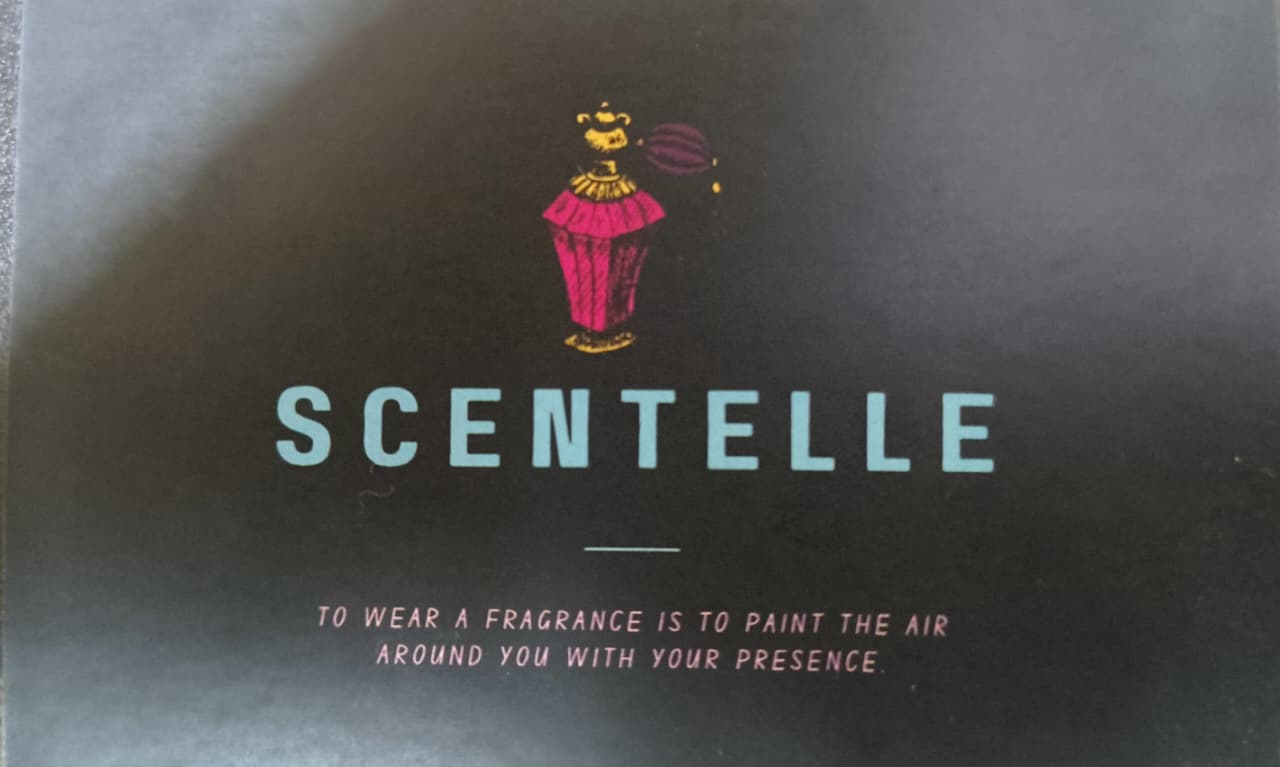
The Scentelle brand card: the atomiser logo mark above the wordmark and tagline
The name

Scentelle

To wear a fragrance is to paint the air around you with your presence.

Scent, and the softness of a name that sounds like one. The mark is an atomiser drawn by hand — magenta glass, gold filigree, a plum bulb with a tassel — because that is the object our grandmothers actually kept on a dressing table.

02 / Our story

Who we are, and
why we bother.

Who

Scentelle is a small Indian fragrance house rooted in a country that has distilled attar continuously for longer than most countries have existed. We are not a distillery. We are the people who sit with the distillers, taste every batch, and decide what is worth putting a label on.

Why

Because most of what is sold as attar today is a fragrance oil blended in a factory, cut with a carrier and priced like the real thing. That is not a small dishonesty. A genuine attar is a season, a fire and a person’s judgement, and it should smell like all three. We exist to keep that available at a price a working person can justify, and to say plainly what is in the bottle.

How we choose the oils

Every oil is judged on skin, never on paper, and never on the first hour. We wear a sample for a full day and again a week later, once it has settled. A batch has to hold its character for at least eight hours, sit close instead of shouting, and read the same on three different people. We ask the distiller which field the flowers came from and which week they were cut, and if the answer is vague we pass. Batches are small on purpose: two hundred bottles at most, so nothing sits long enough to turn.
03 / What we hold to

Three rules we do not bend.

01

Honest oils

What the label names is what the bottle holds. If a composition is a blend, we say so and we list what went in. No mystery “fragrance” line.

02

Zero alcohol

Pure botanical oil, nothing to sting or dry the skin and nothing to flash off in ten minutes. It is why attar works in Indian heat and why it lasts.

03

Small batches

Two hundred bottles at most, filled and sealed by hand. When a batch is gone it is gone, and the next one will smell like its own season.

Start here

Nineteen attars. One of them is yours.

Browse the whole collection, or answer four short questions and let the finder narrow it down for you.